
Wednesday, 15 March 2017

Short Walk to Okhaldhunga
Short Walk to Okhaldhunga
Made the Fish Longlist !!!http://www.fishpublishing.com/2017/03/09/short-long-lists-short-story-contest-201617/
Saturday, 11 February 2017
A MAGICAL Visit


Sunday, 18 September 2016
Library copies

#romance #Amsterdam #vangogh #France
Thursday, 19 May 2016
The Hotel Magnificent
The Hotel Magnificent
 The Hotel Magnificent stands high
above a small village on the Annapurna trekking circuit of north-central Nepal,
two days walk from the nearest road. It is officially called the Hotel Magnificent
View but its board is too short, or perhaps broken. One thing is true, however,
the view from the hotel is incredible. Perched – balanced almost – on a shale
ledge on the steep slope of the hillside, the windows of the Hotel Magnificent face
north-west towards the snow-capped mountains of the High-Himalaya.
The Hotel Magnificent stands high
above a small village on the Annapurna trekking circuit of north-central Nepal,
two days walk from the nearest road. It is officially called the Hotel Magnificent
View but its board is too short, or perhaps broken. One thing is true, however,
the view from the hotel is incredible. Perched – balanced almost – on a shale
ledge on the steep slope of the hillside, the windows of the Hotel Magnificent face
north-west towards the snow-capped mountains of the High-Himalaya.
The village nestles in the dip of the valley. Dan and I are
tired and hungry as we descend the path towards it, thinking of dhal bat, the evening meal and hoping,
maybe, for a hot shower. The blue tin roofs, testimony to its prosperity as a
trekkers’ stopover, are bright and welcoming, glinting jewels in the afternoon
sun. In the streets stalls are set out with displays of embroidered bags, brass
bowls, ancient padlocks, fat Buddhas, carved wooden boxes, packs of incense and
shawls of coloured wool. After almost two weeks in the mountains the lure of
shopping is irresistible. I pause to examine a shawl, peacock blue, feather
light and soft as cotton wool. But Dan wants food.
‘Come on,’ he sighs, tugging my sleeve. We follow our endlessly
patient guide as he negotiates the rough, stone paving, the heaps of manure
from the pack ponies and leads us eventually to a flight of steep steps.
‘I can’t get up there,’ I grumble. ‘I’m too tired.’
He shrugs apologetically.
‘Village very busy. Peak season for trekking. Vacancies only
here.’
No option then. We climb, slowly. At the top of the steps I
draw a sharp breath. Dan and I have seen many stunning views in the last ten
days, but this one is right up there. The village huddles below us, all its
defects photo-shopped out by distance, and beyond, against a deep blue sky, rise
the peaks of Annapurna South, Himchuli and Machapuchare, some of the highest
mountains in the world.
 On the terrace of the Hotel Magnificent is a stall identical
in every detail to the ones we have passed, except that somehow the shawls here
are even more colourful, even more desirable.
On the terrace of the Hotel Magnificent is a stall identical
in every detail to the ones we have passed, except that somehow the shawls here
are even more colourful, even more desirable.
‘I give you good price,’ the salesman whispers. His voice
is as slick and dark as his hair. His right hand hovers above his jacket pocket
as he passes a string of wooden beads through his fingers, each one a prayer. I
shake my head and edge away. He smiles, knowingly, as if it is only a matter of
time. His shawls are beautiful, woven from yak wool and dyed a rainbow of
colours that are as velvety bright as a bird’s wing. They sit in luxurious piles.
I covet them.
The view, regrettably, turns out to
be the only remarkable thing about the Hotel Magnificent. Thrown up from
concrete blocks to serve growing numbers of trekkers, it is an ugly creation,
clinging to the mountain like a cyst. The interior is constructed entirely of
wafer thin sheets of plywood, fire-ready kindling. Downstairs a large communal
room is set out with tables and benches. Above them two solar-powered light
bulbs hang from a fragile-looking cable. An oil-drum, which has been reinvented
as a wood-burning stove, squats importantly in the centre of the floor. At the top of the rickety stairs is a
cupboard-sized nook containing a bed, a blanket and a small pile of clothes,
dhobi-washed and drained of colour or feature. The distance between the bed and
a vast plate-glass window is perhaps sixty centimetres but the view it offers over
the mountains gives the illusion of infinite space. This room has no door.
‘Who do you think sleeps there?’
Dan shrugs. ‘Don’t know, but we’re next to them.’
Our room is the other side of the flimsy wall. My bed is
pushed against it. This unknown person will be closer to me than Dan. I will
hear every sound he makes, all through the night.
We dump our bags and stretch a towel across the window to
serve as a curtain.
‘I’m going to see if there’s hot water,’ I say. I have hat
hair, lank and lifeless. I enquire and a woman, possibly the owner, leads me to
a small, stone room containing a dirty toilet and an electric shower. She
explains under what precise conditions these might be persuaded to work. I pay 100
Nepali rupees, seventy pence, about the same as a Mars bar.
‘Waste of money,’ I report back.
Later, Dan and I sit on the hotel
terrace, an unfenced cliff edge high above the village, enjoying the late afternoon
sun. We crane our necks around a washing line adorned with grey underwear and several
stained sheets to enjoy the magnificent view. I sip a lassi savouring the
sweetness of the curd and sugar mix, and feel the energy creep back into my
muscles after the day’s walk. My bones melt a little in the last rays of warmth.
I’m contemplating the shawls.
 Nearby, a very small child is playing in the dirt. A babysitter,
crouches beside her with a mobile phone welded to her palm. Every few seconds she
peels back her fingers to check the screen. When the toddler moves, she reaches
out listlessly and pulls her back. Sometimes she is too slow and the child
dashes to the edge of the terrace where she hovers, crowing with mirth at the sight
of the land falling away beneath her and the smallness of the houses below. Then
the teenager rises sluggishly, swishes across to the child and turns her back as
if she were a clockwork doll. But the child likes the view and the sequence is
repeated again and again.
Nearby, a very small child is playing in the dirt. A babysitter,
crouches beside her with a mobile phone welded to her palm. Every few seconds she
peels back her fingers to check the screen. When the toddler moves, she reaches
out listlessly and pulls her back. Sometimes she is too slow and the child
dashes to the edge of the terrace where she hovers, crowing with mirth at the sight
of the land falling away beneath her and the smallness of the houses below. Then
the teenager rises sluggishly, swishes across to the child and turns her back as
if she were a clockwork doll. But the child likes the view and the sequence is
repeated again and again.
The babysitter checks her phone once more and gives a
satisfied nod.
‘Hoi, Yeshi. She waves imperiously at the stall holder and
points to the little girl. Yeshi hesitates. He has seen another batch of
tourists heading up the hotel steps. He is not young, I realise. His body is
bulky and there are threads of grey in his hair. He raises his arm in a gesture
of supplication but the teenager has pulled a mirror from a cloth pouch and is
examining her eyeliner. The toddler is occupied, swiping a stick at a hen
pecking in the dirt. Yeshi watches, his face creased. The babysitter tugs a
broken comb through her long, black hair and flounces to the steps, crossing
the tourists on her way down.
‘Hoi,’ they call out to Dan and I. ‘That’s some climb.’ I
know instantly from their accents that they are Dutch. The women are interested
in the stall and pause, fingering the brass padlocks, trying on the beanies,
tapping the singing bowls to hear them resonate. Yeshi is trapped with the
toddler and the chicken. He looks longingly across.
Good price. I give you good price. I can feel the song chiming
in his head. Beside me, Dan is sipping a beer, Everest.
‘A mountain in a bottle,’ he jokes. He has nodded to the
Dutch guy, who is standing apart smoking a cigarette. The women have begun
sorting through the shawls and Yeshi cannot help himself. He glances down at
the child, preoccupied for the moment with her game. He makes his decision and sidles
across.
‘I give you good price. Fourteen hundred rupees. Only
fourteen hundred Nepali rupees.’
‘That is too much,’ one of the women objects. The standard
response. This is the game. Both parties are quickly absorbed. Occasionally
Yeshi flicks a glance towards the baby. She has abandoned the chicken and
wandered towards the woodpile at the back of the terrace. No real danger there.
She is perhaps twenty months this tiny girl, pretty in her
shabbiness, soft trousers washed to a pinky-grey, spiky black hair just visible
beneath her woollen hat, miniature down jacket hiding her fragility beneath its
bulk. I watch her as she potters.
Yeshi is engrossed in his transaction. The Dutch women are
smiling and have taken their purses from their backpacks. Moments pass. A cloud
slides across the sun and the terrace chills and darkens. The toddler abandons
the woodpile in search of more animated entertainment. Yeshi is rummaging
happily in his pouch for change. The baby ambles towards the front of the ledge
waving her arms at something she has seen, or imagines she has seen, in the
village below.
I stand up as casually as I can and spot the babysitter
languidly approaching the steps. The toddler sees her too and picks up speed.
She is making a wobbly dash towards the older girl on pattering feet, her arms outstretched
in welcome. Yeshi swivels, clocks the danger and his features contort.
I was born for this moment. I take the fastest five strides
of my life and seize the child’s hood. Her foot slips on the gravelly edge of
the rock but she is feather light. The coat holds her while I scoop her up with
my free hand. She yells in fear and protest but I close my eyes and feel the
wash of relief as I close my arm round her. The babysitter runs up the last few
steps and grabs her from me waving a fist at the stallholder, sending him a staccato
burst of invective. He recoils like a beaten dog against the wall of the hotel.
His right hand reaches for his wooden beads. She is still haranguing him as she
ducks through the door with the weeping child. Dan wraps his arms around me and
I bury my head in his shoulder.
Our guide appears.
‘The man over there,’ I ask, shakily, ‘is he part of the
family that owns the hotel?’
 ‘I think just
working here in return for bed.’ He pauses. ‘Your dinner is ready.’
‘I think just
working here in return for bed.’ He pauses. ‘Your dinner is ready.’
We leave the terrace in the last shafts of sunlight and
follow him inside. As we pass the stall I stroke the shawls.
‘I give you good price.’ Yeshi fixes me with his gaze.
‘We don’t have space,’ Dan reminds me.
‘They would fold up very small.’
‘Not small enough.’
‘I could wear them.’ I imagine descending the mountain
swathed in rainbows of yak wool.
Dan pulls an exasperated face.
We spend the evening crowded around
the wood-burner with the other guests, trying to shuffle close enough to feel its
warmth, straining to read in the dim light. The babysitter is off duty now. She
has a chair near the fire and sits with her legs tucked under her, her hand
still wrapped round her phone. The toddler
patters about in pursuit of a dirty cloth ball that the guests take turns to
throw. Her mother, probably babysitter’s sister, keeps a watchful eye.
Weary from the fresh air and tired of squinting at scruffy
paperbacks, the backpackers peel off in ones and twos and head upstairs to
sleep. Dan and I follow. In the room with no door a figure is sitting
cross-legged on the bed. Yeshi is murmuring some mantra in the dark as he
stares out at the mountains white and luminous as gods in the moonlight.
Through his fingers his prayer beads pass.
 Overnight, the yearning for a shawl grows inside me,
seeping through the flimsy wall. In the morning I stop at the stall once more.
Overnight, the yearning for a shawl grows inside me,
seeping through the flimsy wall. In the morning I stop at the stall once more.
‘I give you good price,’ Yeshi nods, his voice sliding
easily over the well-oiled phrase.
‘I suppose we can fit one
in,’ Dan sighs.
I choose the purple, rich and royal as a bishop’s gown.
‘Your room has a beautiful view,’ I observe, handing over a
stupidly small number of notes.
‘Yes,’ he says, quietly. His smile is incandescent. ‘I am
very lucky.’
Monday, 11 April 2016
Great new short story - Mrs Bond's Birthday
 ... now published in Oxfordshire Limited Edition magazine and on here - see below!
Mrs Bond's Birthday
Mrs Bond – I didn’t invite you to call me Patricia -
looked out of the window of her bungalow hoping to see a few snowdrops. As far
as she could tell, these were the only consolation for having a birthday in January.
A promise from the planet that spring was, if not just around the corner, then
at least pencilled in. She had tried on several occasions to persuade her
family to move the celebration to June, but they resisted.
‘It
wouldn’t feel the same,’ her daughters protested. Or even more prosaically;
‘But it’s not the real date.’ She was singularly disappointed in their lack of
imagination. Who cared what date it was? Clearly not the Queen, who celebrated
her ‘official’ birthday with enthusiasm and persuaded the entire nation to do
the same. The point surely was to mark the passing of the years, the necessity
of which was in any case debatable, but if people insisted then she would have
preferred to do it when the sun was shining.
She
sighed. This birthday was more tiresome than usual because today Mrs Bond was
eighty. It had come round several years sooner than she expected but there it
was, unquestionably and indubitably true because she remembered the war.
‘And
it dates one so,’ as she had recently remarked to her small, round dog. There
wasn’t much hope of hiding her age as several of her nearest and dearest had
sent large cards announcing the fact. Why they had felt the need to do this she
had absolutely no idea. Did they think;
a)
that she would be pleased to put such a card on her shelf, seeing it as
evidence they had remembered her advanced age?
 b)
that she thought a large number 8 and a large 0 were more decorative than pictures
of flowers or animals?
b)
that she thought a large number 8 and a large 0 were more decorative than pictures
of flowers or animals?
c)
that she might have forgotten and would need the cards to remind her?
None
of these was remotely true – she would take the flowers every time. Yet of the eleven
cards she had received from her assorted children, grandchildren and neighbours,
seven featured the numbers 8 and 0, notably those from her family. These she
had glanced at with distaste and displayed on the shelf in the garage beside
her tobacco tin and ashtray full of dog ends. There they could stay, she
decided, until they went into the recycling bin, which would be Friday week.
The neighbours had not drawn attention to her age simply because she told them
all the she was 74, which was no age to speak of and didn’t require a special
card. It was important, however, not to let on that she remembered the war.
How
complicated life is apt to become as one grows older, she reflected. Keeping up
with the myriad small deceptions one accumulates grows increasingly onerous.
On
the plus side, she thought she might have spotted a solitary snowdrop under the
apple tree but it was impossible to tell without actually venturing out there
to check. She might do that later, but she could see from the sitting room that
it was decidedly chilly and would require several protective layers:
time-consuming both to apply and then to remove. It could wait.
Instead,
for a change of scene, she walked across the room to examine the view from the
front of the house. Hip was playing up again, she noted, crossly, clenching her
jaw. Might have to have it seen to after all. She leant on the back of an
armchair catching her breath and waiting for the pain to subside. When she
looked up she saw that Margaret-next-door had pottered – tottered, Mrs Bond corrected
herself – into the garden with a bag of stale bread for the birds. The third
Margaret in as many years. She often wondered if it was a problem with the
house – cyanide-impregnated lino or some such. You couldn’t really ask though,
could you? She pushed the blinds aside and waved. Margaret waved unsteadily
back. The cyanide was obviously getting to her too. Pity as she seemed quite
pleasant. Mrs Bond had decided some time previously that there was no point
trying to build up a proper relationship with her elderly neighbours. Usually
you had just got used to them, on cup-of-tea terms so to speak, when they
popped their clogs and a new one came in. Very sad, of course, but also disconcerting
for someone who liked a bit of constancy in a street.
She
let the blinds drop back and peered through the slits instead. She liked her blinds.
So much more discreet than the net curtains her mother had favoured. No
twitching required. The postlady leaned her bicycle on the garden wall and marched
up the path. An envelope fell through the letter box but Mrs Bond didn’t rush
over. She could see from where she was that it was another bill. No presents
yet. That was a bit of a shame as she quite enjoyed opening them in the morning
with her coffee, though disappointingly these days she received mainly shawls
and scarves. Woolly things to wrap around her as she sat or hobbled about. All
very cosy and many of them probably very expensive but… she quite wished
someone would buy her something frivolous, a silk negligée maybe. She would
never wear it, of course, but she would lay it between layers of tissue paper
in her underwear drawer and get it out to stroke from time to time. She would
imagine how it might have looked on her when she was younger and how Mr Bond
might have smiled to see her in it. She glanced sadly across at the photo on
the mantelpiece. He was there as usual, sitting in a garden chair admiring his
dahlias. She mouthed a silent ‘hello’.
Pulling
a tissue from her sleeve, Mrs Bond blew her nose firmly. Margaret had gone back
in and the street was empty. There was nothing much to see. No mothers hurrying
along with pushchairs or teenagers slouching past on their way to the
comprehensive. It was Saturday, of course, and she had a nasty feeling her
daughters were planning something sociable despite her avowed wish that nothing
of the sort should occur. It gave people ideas when things fell at the weekend.
Mrs
Bond had several family members in close vicinity, all of whom were very
capable organisers. She had moved back to the small, unprepossessing town where
she had spent the early years of her marriage after she lost Mr Bond, thinking
that she might as well be there as anywhere else. It was flat and unlikely to
prove challenging as the years advanced. However, children and grandchildren
had followed her there in order, it seemed, that she should not spent her
retirement idly. On the contrary, she would be gainfully occupied looking after
their various animals and offspring while they travelled abroad or held down
well-paid jobs in the city.
‘She
likes to feel useful,’ they remarked. ‘It’s so good for her to have something
to do.’
Mrs
Bond knew they said this because she had overheard it on several occasions.
They thought she was deaf. And sometimes she was, but not always. In fact, not
nearly as often as they thought.
A
small fluffy cat jumped up onto the windowsill and rubbed itself along her arm.
‘Just
a minute,’ she said. The kitten presumably fancied a drop of milk. She had called
the creature Maggie after her ill-fated neighbours. It seemed the simplest
thing to do – no new names to have to remember – and it was a way of ensuring continuity on
the Margaret front. Anyway, she told herself, it was a perfectly reasonable name
because it sounded quite a lot like moggie. Leaning on her stick Mrs Bond
crossed to the kitchen with surprising speed.
‘Not
so bad once I get going,’ she observed. Maggie purred her acquiescence.
Time
was getting on. Kitchen Cabinet had just
been announced on the radio and she really couldn’t be doing with Jay Rayner.
Anyway, that meant that daughter number one was late. She was usually here by now
to take her shopping. Just because it was her birthday didn’t mean she didn’t
need groceries for the week. Perhaps Debbie would have time to stop for coffee
and a scone in Sainsbury’s. Often she was too busy but given the occasion Mrs
Bond didn’t think it would be too much to ask. The whole idea of being taken to
places irked her. She had a practically new Clio sitting in the drive and if it
wasn’t for this hip… Hmph.
The
buzz of the doorbell woke the little round dog from its snooze and it barked
twice without bothering to get up. Mrs Bond didn’t move either. She had settled
herself in a chair by the garden window. Deborah had a key; the bell was just a
formality.
‘Hello,
Mum. Happy Birthday.’
Is
it, her mother wondered. Could it possibly be, given the number involved? Her
daughter handed her a soft parcel, prettily tied with a bow.
‘Thank
you, dear.’ Mrs Bond poked the package, reluctant to unwrap it and lose the
moment of anticipation. It was probably a scarf, but while it stayed in its
paper it still might be the negligée.
‘Don’t
you want to open it?’
‘Maybe
when we get back.’
Deborah
shook her head. ‘Whatever. Are you ready?’
‘Of
course. Just let me get my coat.’
 ‘So do you think we might have time for a scone,
dear?’ Mrs Bond enquired as Deborah toured the car park searching for a space.
‘So do you think we might have time for a scone,
dear?’ Mrs Bond enquired as Deborah toured the car park searching for a space.
‘I’m
sure we will if we don’t take too long with the shopping.’
‘Good.
Well, I don’t need much.’
Her
daughter shook her head doubtfully.
She
seems a bit more relaxed today, the older woman decided. Sometimes she could be
very sharp though she hardly seemed to know it. Those kids ran rings round her.
She needed to get them helping a bit instead of always picking up after them.
‘It’s
easier to do it myself,’ Deborah had said when this was suggested. But it was
all a question of training, in Mrs Bond’s opinion. Children weren’t so
different from puppies, after all.
They
got round reasonably quickly. The list seemed to get shorter every week. Maybe
she should listen to that tiresome Jay Rayner, after all, improve her culinary
expertise before she got to the meals-on-wheels stage.
On
the way to the café, they paused so that Mrs Bond could examine the nighties.
She supposed she might be in need of a new one if they were going to cart her
off to hospital with this blessed hip. None
of them really took her fancy, however. Inferior fabric, she considered,
rubbing it between her thumb and forefinger. She caught Deborah watching her
from the end of the aisle with a distinctly amused expression which she decided
to ignore.
‘Nothing
there, Mum?’
‘All
synthetic,’ Mrs Bond sniffed.
The
scone was nice though. An excellent bake, although Mrs Berry might disagree.
And blackcurrant jam to go with it.
‘We
should probably go,’ Deborah said, when they had drunk their tea.
‘I
suppose you have a lot to do?’
‘A
few bits and pieces. The weekends never seem long enough.’ She was texting
furiously as she spoke, her mother noticed. No wonder she was stressed. The
older lady got carefully to her feet, reaching for her stick as she did so.
Deborah
pushed the phone into her bag and took her arm. ‘Ready?’
Mrs
Bond shook her off. ‘I can manage.’
They
moved slowly back to the car with the trolley.
That was it then, Mrs Bond supposed as they pulled
into her drive. Today’s excitement over. She had half-wondered if there might
be a couple more cars parked outside but the street was quiet. Deborah lifted
the bag of shopping from the boot while she pushed open the door.
‘Surprise
surprise!!’ The bungalow was packed with people.
Surprise!
Who did they think they were kidding? Hadn’t she known all along? That was the
trouble with weekends, everyone was at a loose end. Mrs Bond smiled graciously
at her assembled descendants.
‘How
kind of you all to come.’ The table was piled high with gifts. She settled
herself into her chair and unwrapped them slowly, savouring each one; three
books by her favourite authors, two scarves, a bottle of Samsara perfume and a bar of Frys chocolate cream from the smallest
grandchild. At the bottom of the pile she found the parcel Deborah had given
her that morning. The last one. She undid the bow, removed the patterned
wrapping paper and peeled back a layer of tissue to reveal not quite a negligée
but definitely a silk nightdress. Something she could actually wear. She
stroked her hand across it, watching the light play on the fabric.
‘Perhaps
that will do for the hospital?’ Deborah suggested, quietly.
Mrs
Bond extracted her tissue from her sleeve to remove a fly from the corner of
her eye.
‘Yes,’
she said, scanning the crowd of familiar faces. ‘I think perhaps it might. Thank
you. Thank you, all.’
for Mum
Tuesday, 2 February 2016
On display in bookshop!

And look out for my new short story Mrs Bond's Birthday in a future edition of the Oxford Times magazine, 'Limited Edition'.
Tuesday, 12 January 2016
Oxford Times - fame at last!

A mention for Chasing Sunflowers in the Oxford Times. How cool is that! And they want me to write a short story for them too. Thinking...
Sunday, 10 January 2016
Chasing Sunflowers Book Signing!

 Excited! I'll be signing copies of Chasing Sunflowers at Teapotes, Anduze on Saturday 23rd January.
Please come along and say hello if you live in the area.

No obligation to purchase a copy (though that would be great, of course) just browse the fab stock of English books (we're in France here!) and sample the delicious cake.
Nepal Jaleshwari Expedition

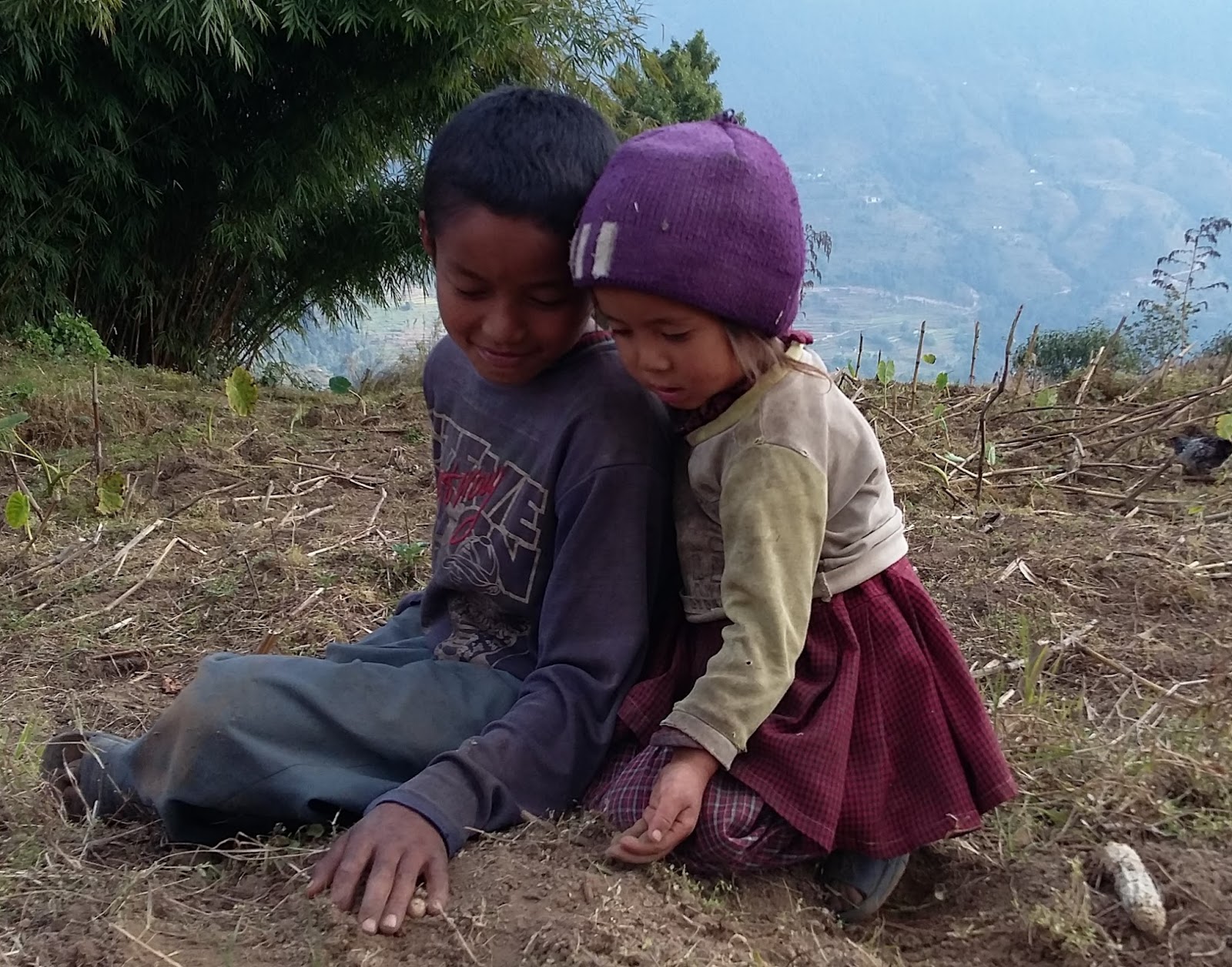
Just before Christmas I took some time out to visit the village of Jaleshwari in Khotang, Nepal with our charity Nepal Remote Villages Trust.
What a marvellous experience. Lots of pictures on www.nepalrvt.org.
And plenty of inspiration for a future novel. :)
Sunday, 22 November 2015
Chasing Sunflowers - where to buy!


Thursday, 5 November 2015
Languedoc & Provence Sun

Chasing Sunflowers is the Bookshelf choice in the latest edition of the Languedoc & Provence Sun. If you haven't seen a copy you can read the article here:
Chasing Sunflowers
Chasing Sunflowers is the
compelling new novel by Midi author
Alison Boulton set in Arles and Amsterdam and peppered with insights into the
work of artist Vincent van Gogh.

The book:
Kate has moved, somewhat reluctantly,
to Holland. Searching for something to fill the gap in her life now son Luke is
at school, she decides to study Van Gogh’s paintings. She explores his work through
classes taught by the enigmatic artist and teacher, Rudy de Jong. Rudy paints
her in his studio high above the canals and Kate discovers her bolder alter
ego, Kaatje. Kate’s story is interwoven with fragments from
Van Gogh’s own and she eventually decides to trace Vincent’s journey to
Provence and see the sunflower fields that so inspired him for herself.
The author:
In 2002 Alison Boulton moved to Languedoc Roussillon with
husband Chris Burns and their family, to renovate a neglected château and set
up a little holiday business in the foothills of the Cevennes. Fresh from a
Creative Writing MA she had lots of romantic ideas about tucking herself away
to write novels, but the realities of establishing the business and earning a
living in a new country meant those plans were postponed. Now the children have
grown up, the Château du Fraissinet welcomes holidaymakers every summer season
and the dream of publishing a book has finally come true.
***
The inspiration:
Alison says: Whilst it is definitely fiction, Chasing Sunflowers also draws on my own experience and
this gives the book an authentic feel. The story blends passion with family
drama and most readers will be able to relate to the heroine, Kate, as she
struggles to establish herself in a new place.
The novel was conceived a couple of
winters ago and it began quite simply with a mental image of a small boy
painting sunflowers for his mother after a trip to the Van Gogh museum. I lived
in Amsterdam for three years with my (then) young family but the vision I
conjured of four-year-old Luke never happened as it is written. Neither, I must
add, did the rest of the book! Like most writers I find the writing process is
part planning and part unconscious creation. I start with an idea and a plot
outline but often the imagination takes over and creates something new and
occasionally unforeseen.
The original image of Luke with his
picture grew into a short story and then, quite slowly, into a novel. Luke’s
experience of immersion in Dutch school and the struggle of learning a second
language is something that many L&P
Sun readers will identify with. Initially, he struggles to fit in and looks
forward to his friend Henry visiting from England. This is echoed in the novel by
Van Gogh waiting in the Yellow House in Arles for Gauguin, and painting the Sunflowers pictures to welcome his
friend.
Vincent van Gogh (1853-1890)
Many readers will already be familiar
with the outlines of Vincent’s story. He was born in a small town in the
Netherlands, the eldest son of a Protestant preacher and seems to have been a
very intense and serious young man who found it difficult to connect with other
people and was often lonely. As an adult he suffered from severe bouts of poor
mental health. He was very aware of the problem and voluntarily admitted
himself to asylums on more than one occasion, waiting there until he felt well
enough to return to the world. His parents were disappointed when he chose to
pursue a ‘career’ as an artist but his brother, Theo, spotted his potential and
supported him, sending him money so he could concentrate on his painting. Theo
continued to do this even when he was struggling to support his own family on
limited funds.
 In 1888 Van Gogh travelled to Arles in
search of the sun, light and colour that he was unable to find in northern
Europe. This was one of the most creative periods of his life and masterpiece
after masterpiece emerged from the tiny ‘Studio of the South’ in the Yellow
House at the Place Lamartine. It was a breakdown here that led to his famous split
with Gauguin and the severance of Vincent’s ear. Today, Vincent van Gogh is
widely held to have been a genius whose bold use of colour and passion for
painting the world as he saw it, changed art forever. But sadly, his incredible
talent was not widely recognised until after his death.
In 1888 Van Gogh travelled to Arles in
search of the sun, light and colour that he was unable to find in northern
Europe. This was one of the most creative periods of his life and masterpiece
after masterpiece emerged from the tiny ‘Studio of the South’ in the Yellow
House at the Place Lamartine. It was a breakdown here that led to his famous split
with Gauguin and the severance of Vincent’s ear. Today, Vincent van Gogh is
widely held to have been a genius whose bold use of colour and passion for
painting the world as he saw it, changed art forever. But sadly, his incredible
talent was not widely recognised until after his death.
When I moved to Amsterdam I was already
a fan of Van Gogh so the museum was an immediate attraction and I visited many
times. It is housed in an impressive, modern building and has a permanent queue
outside! When I came to the south of France in 2002 I was immediately drawn to
Arles because of its Van Gogh connection, but returning in 2011 when I was
researching the novel gave it a whole new perspective. Like Kate in Chasing Sunflowers, I completed the Van Gogh tour shown
in the tourist leaflet and would definitely recommend it for admirers of
Vincent’s work.
The Van Gogh Foundation in Arles was not
built when I wrote the initial draft of the book but I have gone back for a
visit. It is a joy to see Vincent’s paintings in a city that was his home
during such a vital and creative period of his life.
Alison Boulton is also author of Tom’s Daughters available on Amazon for Kindle.
Chasing Sunflowers on sale in Nimes Airport

Pick up a copy to read while you wait for the plane or treat someone for Christmas.
€15
Thursday, 15 October 2015
Chasing Sunflowers - feedback
Have just finished Alison Boulton's amazing book "Chasing Sunflowers". I didn't want it to end! A cracking story which gallops along with twists and turns, is sensitive and brilliant! Thank you. Alison
Feedback from Patricia Cooper, Languedoc Roussillon, France
Real readers are loving the book, so why not the agents???
Feedback from Patricia Cooper, Languedoc Roussillon, France
Real readers are loving the book, so why not the agents???
Thursday, 24 September 2015
Chasing Sunflowers - Lord of the BookCovers?

Chasing Sunflowers stunning cover has been short-listed for the Completely Novel Lord of the Book Covers competition. We're not entirely surprised - it's so gorgeous, vibrant and so completely pickuppable!
To make sure it wins please
VOTE CHASING SUNFLOWERS
using this link http://ow.ly/SCg9P
Friday, 11 September 2015


Wednesday, 26 August 2015

Friday, 14 August 2015
Chasing Sunflowers - a snippet
 |
| 'Panneau' of Van Gogh's painting; les Alyschamps, Arles |
‘Here’s the panneau,’
Rudy said. ‘It’s a study of autumn leaves rather than the burial ground.’
Kate examined the
picture. It wasn’t a painting of history. Vincent seemed to have lived quite
spectacularly in the present; autumn trees, the long alley, the cold blue-grey
stone of the tombs, figures – people moving across the canvas. A transiting
moment captured and stilled, a slither of time under a microscope.‘It’s typical
of him. He’s painted almost nothing and seen everything,’ she said at length.‘Now
you begin to understand,’ Rudy approved. To hide her pleasure, Kate tossed her
head and walked faster towards the half-ruined church that awaited them at the
end of the path.
Thursday, 13 August 2015
Chasing Sunflowers - now in France!


Also available from https://completelynovel.com/books/chasing-sunflowers
Subscribe to:
Posts (Atom)

